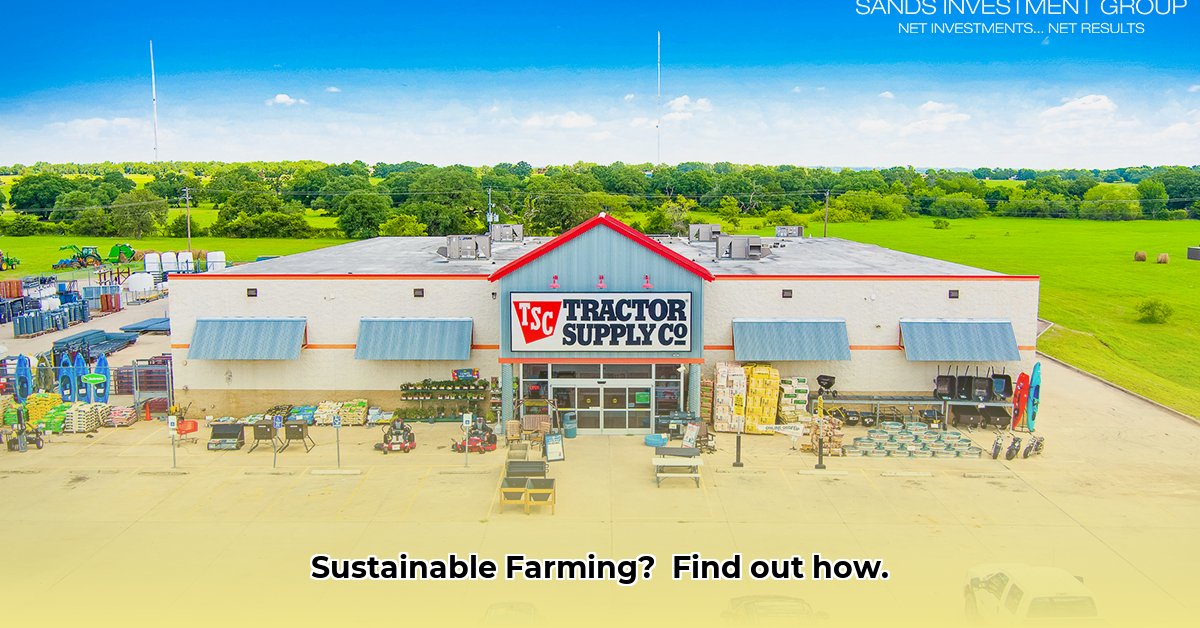
Tractor Supply Big Spring, TX: A Sustainable Farming Partner?
Tractor Supply's Big Spring, Texas location, situated near major highways like US Route 87 and I-20, serves a large farming community encompassing areas such as Rosemont, North Park, and Coahoma. For ideas on improving sustainability, check out this helpful resource on compost bins. While its accessibility suggests a significant role in supplying local agriculture, the extent of its contribution to sustainable farming practices remains largely unknown. This article investigates this gap in knowledge, highlighting the need for data and collaboration to promote sustainable agriculture in West Texas.
Accessibility: A Convenient, Yet Unquantified, Resource
The store's strategic location makes it a convenient source for farming supplies. However, the connection between this convenience and the adoption of sustainable agricultural practices requires further investigation. While anecdotal evidence suggests high traffic, quantifying the actual volume and types of sustainable products sold remains crucial. Do farmers readily find the eco-friendly options they need? This is a question that requires substantial data to answer accurately.
The Missing Data: A Critical Gap in Understanding Sustainable Practices
The core challenge is a significant lack of data regarding Tractor Supply's involvement in sustainable agriculture within West Texas. We lack concrete information on several key aspects:
- Sales figures for organic farming products (seeds, fertilizers, pest control).
- Availability and sales of water-efficient irrigation equipment.
- The extent to which the store promotes or supports sustainable farming practices through educational initiatives or partnerships.
This absence of data prevents a comprehensive assessment of Tractor Supply's role in fostering sustainable agriculture within the region. Without quantifiable evidence, any assertions about their impact remain speculative.
Stakeholder Analysis: Collaboration for a Sustainable Future
Addressing this data gap necessitates a collaborative effort involving several key stakeholders:
- Tractor Supply: Could actively survey local farmers regarding their needs for sustainable products, potentially informing future inventory decisions.
- Local Farmers: Should actively participate in surveys and provide feedback on product availability and quality.
- Regional Government: Could incentivize sustainable practices via policies and funding for educational programs in partnership with Tractor Supply.
- Environmental Advocacy Groups: Could provide expertise and resources to both farmers and Tractor Supply, facilitating the transition to sustainable practices.
This collaborative approach offers the most promising pathway towards a comprehensive understanding of Tractor Supply's impact and how to improve sustainable agricultural practices.
Actionable Steps: A Call to Action for a Greener Future
To fill the critical data gap and promote sustainability, we propose the following actionable steps:
- Comprehensive Data Collection: Conduct thorough research, including surveys, sales data analysis (if accessible), and interviews with farmers and Tractor Supply staff to quantify the availability and demand for sustainable agricultural supplies.
- Targeted Farmer Surveys: Develop and implement detailed surveys to directly assess farmer needs and preferences regarding sustainable products and services.
- Multi-Stakeholder Workshops: Organize workshops bringing together farmers, Tractor Supply representatives, government officials, and environmental organizations to foster collaboration and information sharing. These workshops should focus on identifying and addressing the challenges of accessing sustainable agricultural supplies.
- Transparent Reporting: Encourage Tractor Supply to publicly report on its sustainability efforts, including sales data for environmentally friendly products, sourcing practices, and any sustainability initiatives.
These four steps represent a feasible framework for achieving a more complete understanding of Tractor Supply's role and driving positive change.
Conclusion: Building a Sustainable Future in West Texas
The absence of data surrounding Tractor Supply's contribution to sustainable farming in West Texas represents a significant knowledge gap. Addressing this gap requires a concerted effort involving all stakeholders—farmers, Tractor Supply, government, and environmental organizations. By working collaboratively and implementing the suggested steps, we can achieve a more sustainable and resilient agricultural future for the region. The potential for positive change is substantial, but it hinges on a commitment to thorough research and transparent communication.